

Argentinean composer Diego Tedesco's debut portrait album Varietas highlights his charged, gestural style in works for chamber ensemble, instrument plus electronics, and orchestra. Featuring performances by longtime collaborators violinist Miranda Cuckson, guitarist Daniel Lippel, soprano Natalia Cappa, counter)induction, Orquesta Amigos de la Nueva Música, and the Composers Conference Ensemble, Tedesco carries forward the torch for a rich lineage of Argentinean contemporary music with his clarion expressivity.
| # | Audio | Title/Composer(s) | Performer(s) | Time |
|---|---|---|---|---|
| Total Time | 66:16 | |||
| 01 | Capriccio | Capriccio | Miranda Cuckson, violin, Composers Conference Ensemble, James Baker, conductor | 10:15 |
| 02 | Portrait #2 | Portrait #2 | Daniel Lippel, guitar | 5:57 |
| 03 | Scherzo | Scherzo | counter)induction | 8:23 |
| 04 | Portrait #1 | Portrait #1 | Miranda Cuckson, violin | 8:45 |
| 05 | De los sos ojos | De los sos ojos | Natalia Cappa, soprano | 11:37 |
Varietas | ||||
| Composers Conference Ensemble, James Baker, conductor | ||||
| 06 | I. Intonazione | I. Intonazione | 1:58 | |
| 07 | II. Estructuras divergentes | II. Estructuras divergentes | 7:17 | |
| 08 | III. Resonancias | III. Resonancias | 4:33 | |
| 09 | Before the World | Before the World | Orquesta Amigos de la Nueva Música, Juan Miceli, conductor | 7:31 |
Composer Diego Tedesco's debut portrait album chronicles his vivacious, brilliantly hued gestural writing, as well as several of his long term collaborations. A student of the eminent Argentinean composer Mario Davidovsky, Tedesco's participation in Davidovsky's Composers Conference outside of Boston laid the foundation for many of relationships behind the works heard here. While Davidovsky's presence is felt both musically and in terms of shared connections between key figures on this recording, Tedesco's compositional voice is unique and distinctive.
Tedesco met violinist Miranda Cuckson at the Composers Conference in 2014, during which she performed in his Varietas, for fifteen players heard here; he subsequently composed his work for solo violin and ensemble for her, Capriccio to be performed at the 2017 conference. Clarinetist Benjamin Fingland was also a member of the conference ensemble and a performer on both of those Tedesco works, as well as a colleague of Cuckson’s in the New York based ensemble, counter)induction. In 2014, counter)induction artistic directors Douglas Boyce and Kyle Bartlett had curated an 80th birthday concert for Mario Davidovsky and invited guitarist Daniel Lippel to join the group to perform in two of his chamber works. The various threads of connection between members of counter)induction and Tedesco led him to compose the mercurial, character-rich Scherzo for the ensemble in 2019.
Tedesco’s first two Portraits for instrument and electronics grew from there, written for violinist Cuckson and the guitarist Lippel respectively. Moreover, they are the beginning of a series of electroacoustic works that pay homage to Davidovsky’s legacy as an iconic pioneer of electroacoustic music with his Synchronisms works for instrument and electronics. De los sos ojos was written for soprano Natalia Cappa and featured on her 2024 New Focus album Una (FCR391), a compilation of new works for voice and electronics by Argentinean composers. While Tedesco’s orchestral work Before the World is the one piece that eludes the tight web of interconnection, its inclusion here gives welcome context to the trajectory of Tedesco’s music in the last 15 years, as well as how his gift for color and gesture maps itself onto larger ensemble forces.
Read MoreAmong the primary points of focus in Davidovsky’s music is the journey motivic material takes as it is reframed within different character areas in a piece and shifts its role in an ever evolving dramatic dialogue. Diego Tedesco shares this penchant for recasting thematic material; one can hear it most apparently in the migration of similar motivic ideas as they navigate shifting expressive worlds in Scherzo, Capriccio, and Varietas.
In his approach to electronic material, Tedesco shares Davidovsky’s deeply felt skepticism of the technological vanguard, opting to construct his playback part from what he calls “discarded material,” intentionally repurposing sounds that the inexorable wave of progress has chosen to leave behind. In doing so, Tedesco reclaims a purity in his electroacoustic approach that can be obscured by the pervasive use of the newest software or platform, until the next one comes along. With this collection of scraps of sound, he crafts music that is full of expression, jumping between pathos and wry humor with agility. Tedesco cultivates a healthy dose of the absurd in these Portraits, a character that strikes as an expansion of Davidovsky’s own tragicomic impulse that saturates the melodrama in his music. Particularly in Portrait #2, Tedesco engages in a kind of deconstruction of the guitar’s voice, splintering into a distorted collage of its myriad stylistic tropes. He is only slightly more reverent of the violin’s vaunted status; while the prodigious virtuosity in Portrait #1 is a nod to Davidovsky’s Ysaÿe-inspired Synchronisms #6, the raw overpressure figures and stuttering articulations do more than enough to bring the instrument down from its romantic perch to join the dystopian sonic environment which engulfs it.
And yet while Davidovsky’s presence is felt throughout these works, and nowhere more than in the Portraits, Tedesco is decidedly his own composer. Where Davidovsky constructs interdependent dramatic architectural structures whose coherence relies on pristine execution, Tedesco composes in broader strokes, with salient phrases that project clear expression through urgent gestures, decorated with ornamental detail. In this way, Diego Tedesco’s music feels liberated and grounded at once, buoyant with fantasy and embellishment but tethered to larger structural arcs by the clarity of its shapes and expressive content. In a recent conversation, Diego shared one of Mario’s anecdotes about composing — a war metaphor where military airplanes, trains, and infantry all advance at their own pace and the generals need to manage multiple speeds to achieve their objective. Similarly, composing involves balancing many layers of activity progressing at different rates while developing each strand organically and preserving a coherent whole. Davidovsky’s solution to that puzzle is a music of rhetoric, no surprise for those who know how much inspiration he drew from Haydn and Beethoven’s taut management of thematic material. Tedesco manages these layers through a fine calibration of energetic impulses, drawing on a continuum from stasis to dense activity to articulate formal arrivals. He shares Davidovsky's uncanny quality of structural inevitability in their music, but arrives at it through his own powerfully articulated means.
– Dan Lippel
Executive Producer: Daniel Lippel and Diego Tedesco
Mastered by Ryan Streber, Oktaven Audio
Design, Artwork, and Layout: Diego Tedesco
Capriccio
Recorded at Wellesley College, Wellesley, MA, on 7/22/2017
Engineer: Anthony Di Bartolo
Composers Conference Ensemble:
Miranda Cuckson: solo violin
Barry Crawford, flute; Benjamin Fingland, clarinet; Jennifer Ney, horn; Jeff Missal, trumpet; Mike Lormand, trombone; Steven Beck, piano; Mike Truesdell, percussion; Adda Kridler, violin; Liuh-Wen Ting and Louise Schulman, violas; Joshua Gordon and John Popham, cellos; Greg Chudzik, contrabass
James Baker, conductor
Portrait #2
Recorded at Oktaven Audio, Mt. Vernon, NY on 8/13/2022
Engineer: Ryan Streber
Session Producer: Ryan Streber and Diego Tedesco
Editing Producer: Daniel Lippel
Scherzo
Recorded at Oktaven Audio, Mt. Vernon, NY on 2/19/2020
Engineer: Ryan Streber
Session Producer: Ryan Streber and counter)induction
Editing Producer: Daniel Lippel
counter)induction: Miranda Cuckson, violin; Jessica Meyer, viola; Benjamin Fingland, clarinet; Caleb Van der Swaagh, cello; Daniel Lippel, guitar
Portrait #1
Recorded at Oktaven Audio, Mt. Vernon, NY on 1/18/2023
Engineer: Ryan Streber
Session Producer: Daniel Lippel and Diego Tedesco
Editing Producer: Daniel Lippel
De los sos ojos
Produced by Natalia Cappa
Recorded and Mastered at Estudio Puntoar
Recording Engineer: Ariel Gato
Varietas
Recorded at Wellesley College, Wellesley, MA, on 7/26/2014
Engineer: Anthony Di Bartolo
Composers Conference Ensemble: Barry Crawford, flute; Peggy Pearson, oboe; Benjamin Fingland, clarinet; Adrian Morejon, bassoon; Patrick Pridemore, horn; Gareth Flowers, trumpet; Benjamin Herrington, trombone; Christopher Oldfather, piano; Pablo Rieppi and Matthew Gold, percussion; Adda Kridler and Miranda Cuckson, violins; Lois Martin, viola; Joshua Gordon, cello; Doug Balliett, contrabass
James Baker, conductor
Before the World
Recorded at Auditorio de la Facultad de Derecho, Buenos Aires, on 9/22/2012
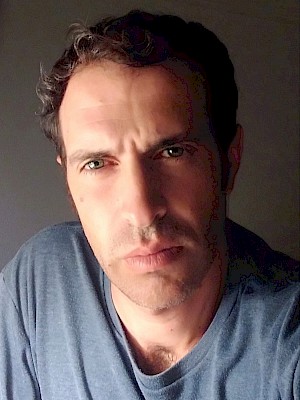 Diego Tedesco is an Argentine composer born in Buenos Aires in 1974. Initially self-taught, he later studied composition with Julio Viera and Francisco Kröpfl, alongside studies in fine arts and graphic design at the University of Buenos Aires. His music has received numerous distinctions, including the Juan Carlos Paz Prize, the Argentine National Award, the Koussevitzky Foundation Music Award, and the Premio Municipal. In 2016, his first opera, El Fiord, commissioned by the Teatro Colón, was premiered in Buenos Aires. His works have been performed internationally by distinguished soloists and ensembles in venues and festivals across the Americas and Europe.
Recently called “a fearless, visionary, and tremendously talented artist” (Sequenza21) and “a poetic soloist with a strong personality, yet unpretentious” (Die Presse, Vienna), Miranda Cuckson delights audiences with her playing of a great range of music and styles, from older eras to the newest creations. An internationally acclaimed soloist and collaborator, violinist and violist, she enjoys performing at venues large and small, from concert halls to casual spaces.
She has been a featured artist at the Berlin Philharmonie, Suntory Hall, Casa da Musica Porto, Teatro Colón, Cleveland Museum, Art Institute of Chicago, San Francisco’s Herbst Theater, St. Paul Chamber Orchestra’s Liquid Music, the 92nd St Y, National Sawdust, and the Ojai, Bard, Marlboro, Portland, Music Mountain, West Cork, Grafenegg, Wien Modern, Frequency, and LeGuessWho festivals. Miranda made her Carnegie Hall debut playing Piston’s Concerto No. 1 with the American Symphony Orchestra. She recently premiered Georg Friedrich Haas’ Violin Concerto No. 2 at the Vienna Musikverein and with orchestras in Japan, Portugal and Germany, and the Violin Concerto by Marcela Rodriguez with the Orquesta Sinfónica Nacional de México. Miranda is a member of interdisciplinary collective AMOC and director of non-profit Nunc. She has guest curated at National Sawdust and programmed concerts at the Contempo series in Chicago and Miller Theatre in New York, among others. Her numerous lauded albums include Világ, featuring the Bartok Sonata for Solo Violin with contemporary works; the Ligeti, Korngold, Ponce, and Piston concertos; music by 20th century American composers; Bartók/Schnittke/Lutoslawski sonatas; Melting the Darkness, an album of microtonal/electronic music; and Nono’s La lontananza nostalgica utopica futura, named a Recording of the Year by The New York Times. An alumna of The Juilliard School, where she earned her doctorate, she teaches at Mannes College/New School University.
http://www.mirandacuckson.com/Composers Conference Ensemble: Founded in 1945, The Composers Conference is a summer program that embraces collaborative music creation by musicians at the beginning of their careers, those that are well-established, and those for whom music is an important part of their lives. The oldest and most respected program of its kind, The Composers Conference was guided by Pulitzer Prize-winning composer Mario Davidovsky for 50 years. In 2019, composer Kurt Rohde was appointed the new Artistic Director. As part of the conference’s programs, the Composers Conference Ensemble consists of the finest new music specialists, many of whom are members of highly regarded groups in the U.S.. The Ensemble performs and records music of the Composer Fellows and Guest Composers, whose music is featured along with contemporary classics and rarities from the standard repertoire in the summer concerts.
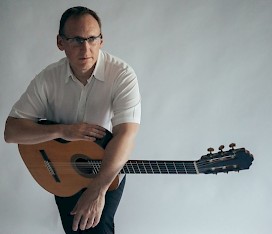 Guitarist Dan Lippel, called a "modern guitar polymath (Guitar Review)" and an "exciting soloist" (NY Times) is active as a soloist, chamber musician, and recording artist. He has been the guitarist for the International Contemporary Ensemble (ICE) since 2005 and new music quartet Flexible Music since 2003. Recent performance highlights include recitals at Sinus Ton Festival (Germany), University of Texas at San Antonio, MOCA Cleveland, Center for New Music in San Francisco, and chamber performances at the Macau Music Festival (China), Sibelius Academy (Finland), Cologne's Acht Brücken Festival (Germany), and the Mostly Mozart Festival at Lincoln Center. He has appeared as a guest with the St. Paul Chamber Orchestra and New York New Music Ensemble, among others, and recorded for Kairos, Bridge, Albany, Starkland, Centaur, and Fat Cat.
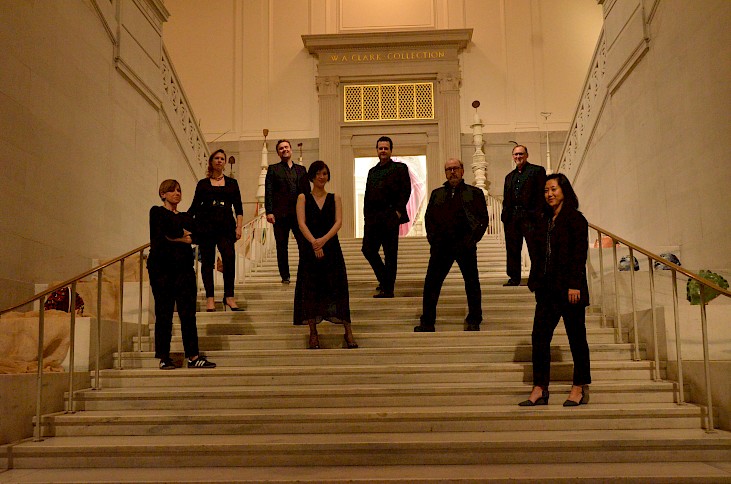
In its twenty years of virtuosic performances and daring programming, the composer/performer collective counter)induction has established itself as a force of excellence in contemporary music. Hailed by The New York Times for its “fiery ensemble virtuosity” and for its “first-rate performances” by The Washington Post, c)i has given critically-acclaimed performances at Miller Theatre, Merkin Concert Hall, the Philadelphia Chamber Music Society, Music at the Anthology, and the George Washington University. Since emerging in 1998 from a series of collaborations between composers at the University of Pennsylvania and performers at the Juilliard School, counter)induction has premiered numerous pieces by both established and emerging American composers; including Eric Moe, Suzanne Sorkin, Ursula Mamlok, and Lee Hyla. c)i has also widely promoted the music of international composers including Jukka Tiensuu, Gilbert Amy, Dai Fujikura, Diego Tedesco, and Elena Mendoza. Since its inception, c)i’s mission has been straightforward: world-class performances of contemporary chamber music, without hype and without agenda other than a complete commitment to the most compelling music of our day.
http://counterinduction.com/Natalia Cappa developed her career as a singer and performer within contemporary music and free improvisation in Buenos Aires, Argentina. She graduated from the Manuel de Falla Conservatory of the City of Buenos Aires as a music teacher and singer with a Postgraduate Degree in Contemporary Music. She has performed numerous premieres of opera and musical theater and chamber music in Argentina. With extensive training in singing, theater and movement, she dedicates her work to the research of new vocalities and extended vocal techniques for their use in contemporary singing, as well as teaching. She has performed works by Stockhausen, Berio, Cage, Ligeti, and works by Argentine composers such as Oscar Edelstein, Jorge Sad, Antonio Tauriello, Mario Davidovsky, Alejandro Viñao, Facundo Llompart. She has sung under the direction of Diego Mason, Enrique Diemecke, Antonio Russo, Santiago Santero, Marcelo Delgado. She has played roles in several theater plays. She also works as a singing and improvisation teacher. She has participated in colloquiums and lectured at international music festivals in Argentina and Mexico; and has published articles and papers on the voice in contemporary music in academic publications and specialized journals in Argentina and Spain. She is a member and co-founder of the TRoneitor Duo and the Soundscraps group with which she has performed since 2018 in many cultural centers, art galleries and auditoriums in the city of Buenos Aires. The work of the Soundscraps group “El Plata a su Derecha” has won the Special Recognition for National Production at the edition of International VideoArt Festival FIVA 2019. TRoneitor Duo’s works have been programmed at numerous international music and sound art festivals in Argentina, Colombia, Mexico and Germany.The Duo has published their first album and is now recording their second album with works created by composers of Argentina and Latin America at the 1st TRoneitor Residence.
Desde el territorio de la música contemporánea a la que define como “una superabstracción dentro de un lenguaje que ya de por sí es abstracto”, Diego Tedesco concreta su estreno discográfico con “Varietas”. Un trabajo con nueve obras propias a cargo de grandes nombres de esa escena, que se registró en Nueva York y que se integra al prestigioso catálogo del sello New Focus Recordings
A una década de haber generado la ópera “El Fiord”, encargada por el Teatro Colón, y tras el estreno mundial de la pieza “Ornamenti” a cargo del ensamble EMCDAMus en el Auditorio Julio García Cánepa del Departamento de Artes Musicales, el músico y compositor Diego Tedesco llega a su primer álbum “Varietas”, una obra que en parte se gestó en un par de ediciones de la Conferencia de Compositores que desde 1954 se desarrolla en los veranos cerca de Boston y que el músico estadounidense Daniel Lippel co-produjo y registró en los prestigiosos estudios Oktaven Audio de Nueva York para el sello New Focus Recordings es una de las grandes discográficas mundiales para la música contemporánea.
“Varietas” se nutre de nueve obras de Tedesco desarrolladas en poco más de 66 minutos y que ejecuta un elenco de prestigio en la música de cámara y contemporánea como son el propio Lippel en guitarra, la violinista Miranda Cuckson, la Composers Conference Ensemble dirigida por James Baker, la soprano Natalia Cappa, la Orquesta Amigos de la Nueva Música bajo la batuta de Juan Miceli y el conjunto Counter)induction.
“Empecé como muchos adolescentes tocando la guitarra eléctrica en grupos de rock con mis amigos. Igualmente siempre estaba interesado en la composición, en hacer mis propias pruebas compositivas y sobre todo en lo instrumental. Mis lecturas y mi formación autodidacta en música me llevaron a preguntarme qué se estaba haciendo en este momento en lo que se llama música académica. Ese andar me llevó a descubrir Schoenberg, a Berg, a Webern, a Stravinsky, y luego a Berio, Stockhausen, Ligeti y Boulez.
Seguí investigando y creando totalmente solo y casi a ciegas con lo que podía ir armando con los libros y las partituras que conseguía, hasta que conocí al compositor Carmelo Saitta y le manifesté mi intención de estudiar composición seriamente y él me recomendó estudiar con Julio Viera, que fue uno de mis grandes maestros. Con Julio trabajamos las grandes formas del pasado: fugas en el estilo de Bach, sonatas románticas, cuartetos de cuerda, etcétera. Así que el camino fue muy natural y un día me encontré con que estaba escribiendo ‘música contemporánea’», repasa Tedesco a Negras & Blancas haciendo una síntesis de un andar en el que mereció galardones como el Premio Juan Carlos Paz, el Premio Nacional de Música de Argentina, el Premio de Música de la Fundación Koussevitzky y el Premio Municipal y logró que sus obras sean interpretadas internacionalmente por destacados solistas y conjuntos en salas y festivales de América y Europa.
-¿Puede pensarse a la música contemporánea como una suerte de invención de otras posibilidades expresivas a partir de instrumentos y sonidos habitualmente apoyados en otra matriz?
-No la definiría de una manera muy diferente y creo que el secreto es ese. Si bien es un género, como tantos otros, me gusta pensar lo que hago, y hablo por mí, como una superabstracción dentro de un lenguaje que ya de por sí es abstracto. John Cage, tratando de ayudar a un hipotético oyente que se enfrenta con esta música, decía que solo hay que prestar atención a la actividad de los sonidos.
-En los textos que acompañan el álbum, Lippel relaciona aspectos de tu música con el legado de Mario Davidovsky. ¿Cómo observás la persistencia de esa relación en el pulso de tu obra?
-Mario Davidovsky era para mí una especie de prócer, como Beethoven. Era alguien lejano que existía y que creaba música, pero con una dimensión colosal. Yo tenía devoción por su música y para cualquier argentino Mario era un ser mitológico (había llegado a los Estados Unidos de la mano de Aaron Copland, había ganado el premio Pulitzer y un poco había reinventado la música instrumental y electroacústica). Finalmente lo conocí en 2014 y desde ese momento hasta su muerte en 2019 fue como un ángel guardián para mí. Y lo sigue siendo. Fue una de las influencias más importantes y duraderas en mi música y en mi vida.
-Davidovsky es considerado un pionero de la música electroacústica. ¿Cuánto hay de eso en lo que proponés en “Varietas”?
-No creo que haya nada de novedad en mi música ni en la forma en que pienso la música. Nunca creí en la novedad. Y este es otro de los grandes aprendizajes que me dejó Mario: lo único importante en el arte es la honestidad, el ser honesto con lo que uno hace y con lo que uno es. Otro de mis grandes maestros, Francisco Kröpfl, decía que algunos artistas quieren ser y otros quieren estar. Nunca me interesó estar.
-¿Cómo fue el proceso para llegar a “Varietas”, tu primer disco?
-En 2018 conocí a Dan Lippel, que estaba de visita en Buenos Aires. Nos había acercado Mario Davidovsky. Como Dan es un entusiasta de la música contemporánea y uno de sus grandes intérpretes, me pidió que le acercara algo de mi música. A los pocos días, después de haber escuchado la música que le envié, me propuso un poco en el aire la idea de hacer un disco con el sello New Focus Recordings, del cual él es el director. La idea era compilar las buenas grabaciones que ya tenía en ese momento, buenas técnicamente, y meterlas dentro del disco. En 2019, el conjunto neoyorquino Counter)induction, en el que Dan participaba como guitarrista, me encargó un quinteto que fue estrenado en Nueva York. Dan decidió llevarlo al estudio, a Oktaven Audio, y grabarlo. El tiempo fue pasando, vino la pandemia y justamente en pandemia escribí dos obras para instrumento y electrónica, una de ellas dedicada a Dan. Después de la pandemia se estrenaron esas obras y Dan decidió grabarlas en estudio. Finalmente, hoy todas esas grabaciones confluyen en este disco. A puro empuje de Dan.
-¿Qué implica que este estreno discográfico sea en Nueva York y bajo la producción de Daniel Lippel?
-Significa un orgullo muy grande por el interés y el empuje que Dan puso desde un comienzo en la realización de este disco. Para mí es un honor eso tanto como integrar parte del catálogo de una de las mecas de la música contemporánea.
-¿Cuál pensás que es el aporte de este repertorio a la escena de la música de vanguardia?
-Es una pregunta difícil y, creo, que la respuesta es muy fácil. El aporte es cercano a cero. No puedo pensarlo en esos términos. Creo que es simplemente la constancia de un recorrido, de mi recorrido hasta aquí.
-Tanto en los conciertos como en este disco elegís no tocar. ¿Por qué?
-Creo que nunca serví para tocar en vivo. Yo necesito retocar lo que escribo, necesito que el pensamiento vaya y vuelva, y esto requiere un tiempo, requiere tiempos que son incompatibles con los del intérprete, con los de la música que ya sonó y salió como salió y no se puede volver atrás.
-¿Hay posibilidades de que “Varietas” se ejecute en Argentina?
-“Varietas” es un disco que reúne varias grabaciones y algunas de ellas, de hecho, fueron tocadas y grabadas en la Argentina. En cuanto a las obras más voluminosas, las obras para ensambles grandes, es más difícil montarlas, ya que requiere de una gran cantidad de músicos, mucho trabajo, mucho tiempo y dinero. Pero ya sabemos eso acerca de la esperanza, que al parecer tiene un gran sentido de la orientación (risas).
Translation:
From the territory of contemporary music, which he defines as "a super-abstraction within a language that is already abstract in itself," Diego Tedesco realizes his recording debut with Varietas. A work featuring nine of his own compositions performed by major names in that scene, recorded in New York and now part of the prestigious catalogue of the label New Focus Recordings.
A decade after creating the opera El Fiord, commissioned by the Teatro Colón, and following the world premiere of the piece Ornamenti performed by the ensemble EMCDAMus at the Auditorio Julio García Cánepa of the Department of Musical Arts, musician and composer Diego Tedesco arrives at his first album Varietas, a work that was partly developed over a couple of editions of the Composers Conference, held since 1954 during the summers near Boston, and which American musician Daniel Lippel co-produced and recorded at the prestigious Oktaven Audio studios in New York for New Focus Recordings, one of the world's leading record labels for contemporary music.
Varietas draws on nine works by Tedesco spanning just over 66 minutes, performed by a cast of prestigious names in chamber and contemporary music: Lippel himself on guitar, violinist Miranda Cuckson, the Composers Conference Ensemble conducted by James Baker, soprano Natalia Cappa, the Orquesta Amigos de la Nueva Música under the baton of Juan Miceli, and the ensemble Counter)induction.
"I started out like many teenagers, playing electric guitar in rock bands with my friends. At the same time, I was always interested in composition, in making my own compositional experiments, and above all in the instrumental realm. My reading and my self-taught musical education led me to ask what was being done at that moment in what is called academic music. That journey led me to discover Schoenberg, Berg, Webern, Stravinsky, and then Berio, Stockhausen, Ligeti, and Boulez.
I continued researching and creating entirely on my own, almost blindly, with whatever I could piece together from the books and scores I managed to find, until I met composer Carmelo Saitta and told him of my intention to study composition seriously. He recommended that I study with Julio Viera, who was one of my great teachers. With Julio we worked on the great forms of the past: fugues in the style of Bach, Romantic sonatas, string quartets, and so on. So the path was very natural, and one day I found myself writing 'contemporary music,'" Tedesco recounts to Negras & Blancas, offering a synthesis of a journey in which he earned distinctions such as the Premio Juan Carlos Paz, the Premio Nacional de Música de Argentina, the Koussevitzky Foundation Music Prize, and the Premio Municipal, and saw his works performed internationally by leading soloists and ensembles in concert halls and festivals across the Americas and Europe.
"Can contemporary music be thought of as a kind of invention of other expressive possibilities from instruments and sounds usually supported by a different matrix?"
"I wouldn't define it very differently, and I think that's the secret. Although it is a genre, like so many others, I like to think of what I do, and I speak for myself, as a super-abstraction within a language that is already abstract in itself. John Cage, trying to help a hypothetical listener confronting this music, said that all you have to do is pay attention to the activity of the sounds."
"In the liner notes accompanying the album, Lippel relates aspects of your music to the legacy of Mario Davidovsky. How do you observe the persistence of that relationship in the pulse of your work?"
"Mario Davidovsky was for me a kind of founding father, like Beethoven. He was a distant figure who existed and created music, but with a colossal dimension. I had a devotion to his music, and for any Argentine, Mario was a mythological being (he had arrived in the United States under Aaron Copland's wing, had won the Pulitzer Prize, and had in some ways reinvented instrumental and electroacoustic music). I finally met him in 2014, and from that moment until his death in 2019 he was like a guardian angel to me. And he still is. He was one of the most important and lasting influences on my music and my life."
"Davidovsky is considered a pioneer of electroacoustic music. How much of that is present in what you propose in Varietas?"
"I don't think there is anything new in my music or in the way I think about music. I never believed in novelty. And this is another of the great lessons Mario left me: the only thing that matters in art is honesty, being honest with what one does and with what one is. Another of my great teachers, Francisco Kröpfl, used to say that some artists want to be and others want to appear. I was never interested in appearing."
"What was the process that led to Varietas, your first album?"
"In 2018 I met Dan Lippel, who was visiting Buenos Aires. Mario Davidovsky had brought us together. Since Dan is an enthusiast of contemporary music and one of its great interpreters, he asked me to share some of my music with him. A few days later, after having listened to the music I sent him, he floated the idea of making a record on New Focus Recordings, of which he is the director. The idea was to compile the good recordings I already had at the time, technically good ones, and bring them together on the album. In 2019, the New York ensemble Counter)induction, in which Dan participated as guitarist, commissioned a quintet from me that was premiered in New York. Dan decided to take it to the studio, to Oktaven Audio, and record it. Time passed, the pandemic came, and it was precisely during the pandemic that I wrote two works for instrument and electronics, one of them dedicated to Dan. After the pandemic, those works were premiered and Dan decided to record them in the studio. Finally, today all those recordings come together in this album. Driven entirely by Dan's initiative."
"What does it mean for this recording debut to take place in New York and under the production of Daniel Lippel?"
"It means a great pride, given the interest and drive that Dan put into making this album from the very beginning. For me it is an honor both for that and for being part of the catalogue of one of the meccas of contemporary music."
"What do you think this repertoire contributes to the avant-garde music scene?"
"It's a difficult question, and I think the answer is very simple. The contribution is close to zero. I can't think about it in those terms. I think it is simply the record of a journey, my journey up to this point."
"Both in concerts and on this album, you choose not to perform yourself. Why?"
"I don't think I was ever cut out for live performance. I need to rework what I write, I need thought to go back and forth, and this requires time, requires timeframes that are incompatible with those of the performer, with those of music that has already sounded and came out as it came out and cannot be undone."
"Is there a possibility that Varietas will be performed in Argentina?"
"Varietas is an album that brings together several recordings, and some of them were in fact performed and recorded in Argentina. As for the more substantial works, the works for large ensembles, they are more difficult to mount, since they require a large number of musicians, a great deal of work, time, and money. But we already know that about hope, which apparently has a strong sense of direction (laughs)."
— Sergio Arboleya, 6.04.2026
Opening with the spiky, swooning Capriccio (2017), played with flair by Miranda Cuckson (violin) and the all-star Composers Conference Ensemble conducted by James Baker, this debut portrait album is a terrific introduction to Tedesco. Variety is the name of the game, too, as the Argentine composer also gives us solo works for guitar (Dan Lippell) and violin (Cuckson) and electronics, along with other chamber pieces, and an otherworldly vocal piece, De los sos ojos, sung with both abandon and command by Natalia Cappa. In 2024, she included the piece on her album, Una, which I either missed or was too young to understand. Well, I’m on to you now, Tedesco!
— Jeremy Shatan, 6.05.2026
Tensione, contrappunto complesso e fluidità erano i caratteri espressivi della musica di Elliott Carter. Il compositore americano ha lasciato parecchie testimonianze di uno stile che ho spesso ritenuto quello di un compositore ‘classico’ visto nel ‘contemporaneo’, una dimensione che ha avuto un’enorme risonanza tra compositori e musicisti per via di una formula espressiva in grado di mettere d’accordo virtuosismo e strutture musicali. Quanto a virtuosismo e sviluppi, si trattava di porre le basi di una drammaturgia libera dove gli strumenti dialogano, si scontrano o si ignorano pure, un modus operandi ricco di eventi sonori. Nello stile di Diego Tedesco (1974), per esempio, si potrebbero condividere molte delle ricchezze di Carter, sebbene differenze ci sono e questo accade sempre; con Carter il compositore argentino unisce la complessità delle partiture con un’inclinazione passionale, dove però per ‘passionale’ a Tedesco bisogna attribuire altro intendimento, probabilmente un colto dinamismo posto in continua trasformazione creativa. Tedesco viene dagli insegnamenti di Mario Davidovsky e riflette di lui la stessa voglia distopica della musica, divisioni, fratture o moltiplicazioni sofisticate che si stagliano in un ambiente sonoro complesso, figlio di un rigore compositivo che purtroppo per molti addetti ai lavori è considerato fuori moda. Nella monografia per New Focus R. dal titolo Varietas, troviamo un perfetto assetto di un tipo di composizione in grado di proliferare su uno stato apprensivo della forma musicale, una che al suo interno contiene un mix di dramma, vuoto esistenziale, mistero, liricità e ricchezza d’intenti.
Varietas accoglie pezzi che sono di una difficoltà enorme per gli esecutori ma che arrivano a noi con una naturalezza disarmante. 2 brani provengono dai Portraits, materia speculare dei ‘sincronismi’ su cui si inoltrò anche Davidovsky con altri obiettivi, per solista ed elettronica pre-registrata: sono il #1, per violino affidato all’esecuzione di Miranda Cuckson e il #2, per chitarra classica, nelle mani di Daniel Lippel, a cui si potrebbe tranquillamente affiancare (senza numero) De los sos ojos, per voce ed elettronica, che ascoltiamo nella versione della soprano Natalia Cappa. In tutti e tre i casi brillano le interpretazioni, perché lo scopo di Tedesco è proprio quello di evidenziare l’unicità e la personalità degli interpreti, qui alle prese con una costante gestualità non convenzionale, tanta energia condita a padronanza tecnica e un obiettivo di coerenza. La Cuckson ci porta in una dimensione di cui non riusciamo a definire i confini, Lippel compie mirabilie sullo strumento, un immenso ‘legato’ che tiene dentro lo scivolamento velocissimo delle note, tapping e risonanze ottenute su determinati punti della chitarra, compressioni con il palmo delle mani e slide inattesi, in un brano che ha dell’incredibile e cesella una pluralità di eventi a cui Lippel è abituato a percorrere nel suo repertorio (qui un altro punto di conguaglio con Carter); Cappa è semplicemente eccezionale nel riuscire a mediare all’istante tra forma lirica e sperimentazione vocale, oltre 11 minuti di virtuosismi vocali che offrono una visuale distorta del dolore dell’esilio di Rodrigo Díaz de Vivar (il Cid Campeador), con frammentazioni, acuti improvvisi e gestione del materiale fonetico che ha anche metriche di spagnolo castigliano.
In tutti e 3 i casi l’elettronica agisce in simbiosi con gli strumenti o la voce, crea soluzioni, suggestioni, riduzioni o moltiplicazioni dei suoni strumentali, in modo da creare un patchwork sonoro concludente, stratificato dal punto di vista polifonico, che rivelano una cura e un lavoro preventivo prezioso, ben calibrato nel tipo di suoni, nell’organizzazione e distribuzione delle soluzioni nello sviluppo dei pezzi e metro di paragone irriducibile per gli esecutori (ma i tre solisti sono in grado di superare l’artificio) (1).
Il Capriccio, per violino e 13 strumenti, nonché lo Scherzo, per 5 strumenti, sono un modo per verificare nuove modalità di forme musicali riconosciute ma soprattutto sono segni di un’equivalente capacità di Tedesco di saper gestire i parametri musicali anche con una presenza strumentale più marcata, mentre Before the World, che conclude la monografia, è un evidente contrasto con le strutture complesse che caratterizzano lo stile di Tedesco, 7 minuti circa devoluti all’Orquesta Amigos de la Nueva Mùsica che si muovono in un clima di instabilità con le linee melodiche che scompaiono tra gli strumenti, un senso di astrazione e la volontà di creare una sorta di suono primordiale esplorativo e riflessivo.
Varietas è anche una composizione in tre movimenti che è la cartina di tornasole dell’album, la dimostrazione di un principio compositivo che viene da lontano: Tedesco fa riferimento a Johannes Tinctoris, teorico e compositore fiammingo vissuto nel quattrocento, che promulgava la necessità di una musica che dovesse funzionare allo stesso modo di un discorso, uno che fosse elegante, efficace, non noioso e continuamente vario nel tono della voce, nell’espressione e nel ritmo tenuto. Nell’esplicazione di un tris formato da ‘intonazione’, ‘strutture divergenti’ e ‘risonanze’, Tedesco ha voluto applicare quell’incredibile e prodromica regola contrappuntistica ed espressiva di Tinctoris.
Read MoreNota:
(1) Il lavoro composto da Tedesco per i tre solisti va assolutamente visto anche con gli occhi. Qui la premiére del Portraits #1 suonata da Cuckson, qui il Portraits #2 suonato da Lippel all’Universidad Del Este de Carolina, qui De Los sos ojos cantata da Cappa al Conservatorio Superior de Música Ástor Piazzolla di Buenos Aires.
Translation:
Tension, complex counterpoint, and fluidity were the expressive hallmarks of Elliott Carter's music. The American composer left behind several examples of a style I have often considered that of a 'classical' composer seen in the 'contemporary', a dimension that has had enormous resonance among composers and musicians due to an expressive formula capable of reconciling virtuosity and musical structure. In terms of virtuosity and development, it was a matter of laying the foundations for a free dramaturgy where the instruments dialogue, clash, or even ignore each other, a modus operandi rich in sonic events. In the style of Diego Tedesco (1974), for example, many of Carter's riches could be shared, although there are differences, and this always happens; with Carter, the Argentine composer combines the complexity of the scores with a passionate inclination, where, however, by 'passionate' in Tedesco we must attribute a different meaning, probably a cultured dynamism undergoing continuous creative transformation. Tedesco draws on the teachings of Mario Davidovsky and reflects his same dystopian desire for music: divisions, fractures, or sophisticated multiplications that stand out in a complex sonic environment, the product of a compositional rigor that, unfortunately, many in the field consider outdated. In the monograph for New Focus R. titled Varietas, we find a perfect arrangement of a type of composition capable of proliferating on an apprehensive state of musical form, one that contains within itself a mix of drama, existential emptiness, mystery, lyricism, and richness of purpose.
Varietas includes pieces that are enormously challenging for the performers but which come to us with disarming ease. Two pieces come from the Portraits, a mirror image of the "synchronisms" that Davidovsky also explored with other objectives, for soloist and pre-recorded electronics: #1, for violin performed by Miranda Cuckson, and #2, for classical guitar, performed by Daniel Lippel. These could easily be paired (without a number) with De los sos ojos, for voice and electronics, which we hear in the version by soprano Natalia Cappa. In all three cases, the interpretations shine, because Tedesco's aim is precisely to highlight the uniqueness and personality of the performers, here grappling with constant unconventional gestures, a wealth of energy seasoned with technical mastery and a goal of consistency. Cuckson takes us into a dimension whose boundaries we can't quite define, Lippel performs wonders on the instrument, an immense legato that holds within the lightning-fast glide of the notes, tapping and resonances achieved on specific points of the guitar, compressions with the palms of the hands and unexpected slides, in a piece that is incredible and chisels out a plurality of events that Lippel is accustomed to exploring in his repertoire (here another point of comparison with Carter); Cappa is simply exceptional in managing to instantly mediate between lyrical form and vocal experimentation, over 11 minutes of vocal virtuosity that offer a distorted view of the pain of Rodrigo Díaz de Vivar's (El Cid Campeador) exile, with fragmentations, sudden high notes and a management of the phonetic material that even has Castilian Spanish metrics.
In all 3 cases the electronics act in symbiosis with the instruments or the voice, creating solutions, suggestions, reductions or multiplications of the instrumental sounds, in order to create a conclusive sound patchwork, stratified from a polyphonic point of view, which reveal a precious care and preventive work, well calibrated in the type of sounds, in the organisation and distribution of the solutions in the development of the pieces and an irreducible yardstick for the performers (but the three soloists are able to overcome the artifice) (1).
The Capriccio, for violin and 13 instruments, as well as the Scherzo, for 5 instruments, are a way to test new modalities of recognized musical forms but above all they are signs of Tedesco's equivalent ability to manage musical parameters even with a more marked instrumental presence, while Before the World, which concludes the monograph, is a clear contrast with the complex structures that characterize Tedesco's style, approximately 7 minutes devoted to the Orquesta Amigos de la Nueva Mùsica that move in a climate of instability with the melodic lines that disappear between the instruments, a sense of abstraction and the desire to create a sort of primordial, exploratory and reflective sound.
Varietas is also a three-movement composition that serves as the album's litmus test, demonstrating a compositional principle that dates back a long time: Tedesco references Johannes Tinctoris, a fifteenth-century Flemish theorist and composer, who advocated the need for music that should function like a speech—one that was elegant, effective, never boring, and continually varied in tone, expression, and rhythm. In developing a trio of "intonation," "divergent structures," and "resonances," Tedesco sought to apply Tinctoris's incredible and prodromal rule of contrapuntal and expressiveness.
— Hector Garzia, 6.26.2026
Argentine composer Diego Tedesco’s first portrait album reveals a composer with a sure grasp on the musical language he wields. Varietas, out now on New Focus Recordings, includes an assortment of striking works. Three feature soloists (violin, guitar, voice). The others are ensemble pieces. All uncover fresh seams of gold in well-explored mines of atonality and abstraction.
In “Portrait #1,” essentially a single-movement violin concerto, soloist Miranda Cuckson uses rapid-fire extended techniques to define a fascinating vocabulary.
Flashes of interruption from electronics create a frame for a devilish instrumental “portrait” with two faces. First we encounter a busy, in-your-face visage. In the second half, we stare into a flow of whines and hums, as the violin expands into more sustained gestures.
There’s an intimacy to the performance that makes it unsurprising that Tedesco composed this work for Cuckson. As the semi-chaos returns towards the end, it feels as if her instrument has said all the composer and performer could get out of it, and more.
“Portrait #2” features Daniel Lippel, for whom it was written, on classical guitar. In this performance he must navigate his virtuosic way through a nebula of otherworldly electronic bleeps, rumbles, and scratches.
Lippel describes the music accurately as a “deconstruction of the guitar’s voice, splintering into a distorted collage of [the instrument’s] myriad stylistic tropes.” The guitar burbles and pounds, sings and trills and slides and pops, as percussive as it is tonal.
Where in lesser compositional hands such flamboyance can seem gimmicky, in Tedesco’s, shaped through Lippel’s masterful performance, it conjures a compelling and holistic “portrait” indeed.
It’s also worth noting that, like “Portrait #1,” this work for soloist and electronics is in part a tribute to the pioneering electro-acoustic work of Mario Davidovsky, a mentor of Tedesco’s.
In “De los Sos Ojos” Tedesco creates something similar for the human voice. The wondrous Natalia Cappa commissioned the piece. In it, she duets with her own supple soprano in lyrics and vocalise, with light accompaniment from electronic effects. She spits staccatos, exaggerates the rolled r’s of Spanish, gasps and wails, floats operatic vowels, and emits dark spoken-word mutterings that stand out against murky silences. The composer’s description – “distortion, nonsense, and the limits of comprehension” – aptly apply.
Stereophonic and muting effects add dimension, but the real strength of the piece lies in Cappa’s full biological mastery of her vocal capabilities.
Experimental music featuring the human voice continues to be one of our most fertile grounds for innovation, with space for the tongue-in-cheek, the steely and tragic, and everything in between – like this meaty, 11-minute-plus opus. Cappa’s voice quivers and breaks on an extended high-E in the 10th minute. This implies an admission of weakness or incomplete resolve. But in the final minute the note returns, playing along with several other manifestations of the singer, to re-establish control.
“Capriccio” is full of movement that one could plausibly call “capricious.” But it’s also replete with dark, rusty dissonances and swirling momentary harmonies that weave in and out of focus, lending the music weight and density.
Different voices surge to the fore from moment to moment, gasping out snatches of melody – violin, piano, trumpet, French horn. Instruments collide on the same or adjacent notes, creating an air more of argument than of accord.
While unpredictable, the music progresses with an inexorable, original logic. Flurries of rising and descending chromatic scales finally lurch it to a cacophonous stop. There is never, to indulge in cliché, a dull moment.
The “Scherzo” reads as an episodic game between the strings and woodwinds of the ensemble counter)induction). One segment is unabashedly playful, another harsh and grinding (yet with a comical wink), a third ruminative, like a balloon slowly deflating amid soft pizzicatos and pointillist prickings. When the pace picks up again it’s with an ethereal, dancing spirit that explodes in a sudden mood crash.
With two minutes to go, chromatic passages that hark back to the “Capriccio” emerge, along with portamentos and nervous stutters, punchy and jocular. For all its fun, the piece ends breathlessly, anxiously, with an open-strings squeal from a violin.
The three movements of the title piece, performed by the Composers Conference Ensemble, epitomize how some contemporary music can feel like the sonic equivalent of a drip painting. One motive or passage grips the ear, only to be seemingly wiped away by the next. Where sounds land in space and time could be anywhere and anywhen.
It’s in the subconscious that we register recurring or related scraps of sound, pieces of abstract meaning that aren’t themes but have resonance. Such meaning can also be found in the interplay of specific instruments; in dynamic ebb and flow; in spontaneity and planning. A stutter from a trumpet, an attack of vibrato on strings, a percussive blast – this music can grip and pull along a willing listener.
Tedesco also takes inspiration from more direct experience. Struck by an irruption from a flock of starlings and an outpouring of celebration from Granada FC fans, he composed “Before the World” as an attempt to capture the experience for the sound of an orchestra. (The Orquesta Amigos de la Nueva Música is conducted by Juan Miceli.) We hear the shrill of the birds at the outset; some tense quiet intervals; and victorious blasts from the brass, sometimes joined by strings as if the birds and humans are in unison. Random notes suggest enthusiastic conversation among the crowd. Do I hear somewhere in there an imitation of a vuvuzela?
Yet this isn’t programmatic music. One doesn’t need liner notes to appreciate it. As in all the music on the album, fundamentally it’s an expression of a distinct sonic vocabulary both fully formed and always under development. This composer “portrait” displays many colors but a singular exploratory vision.
— Jon Sobel, 8.19.2026
New Focus Recordings is an artist-led collective label featuring releases in contemporary creative music of many stripes, as well as new approaches to older repertoire. The label was founded by guitarist Dan Lippel, composer Peter Gilbert in 2004, and composer/engineer Ryan Streber in 2004, formed …Read More …
Listen to full streaming tracks while you browse the site. New tracks enabled for streaming every month. Click on the button to open up the radio player.


